
Study Illuminates the Structural Features of Memory Formation at the Cellular and Subcellular Levels


NIH -funded study uses avant -garde image techniques to rebuild underlying learning and memory brain characteristics
• Media notice
That:
In a study backed by the National Health Institutes (NIH), the researchers revealed the structural foundations of memory formation in a wide network of neurons in the mouse brain. This work sheds light on the fundamentally flexible nature of how memories are made, which details the changes related to learning at the cellular and subcellular level with an unprecedented resolution. Understanding this flexibility can help explain why memory and learning processes sometimes go wrong.
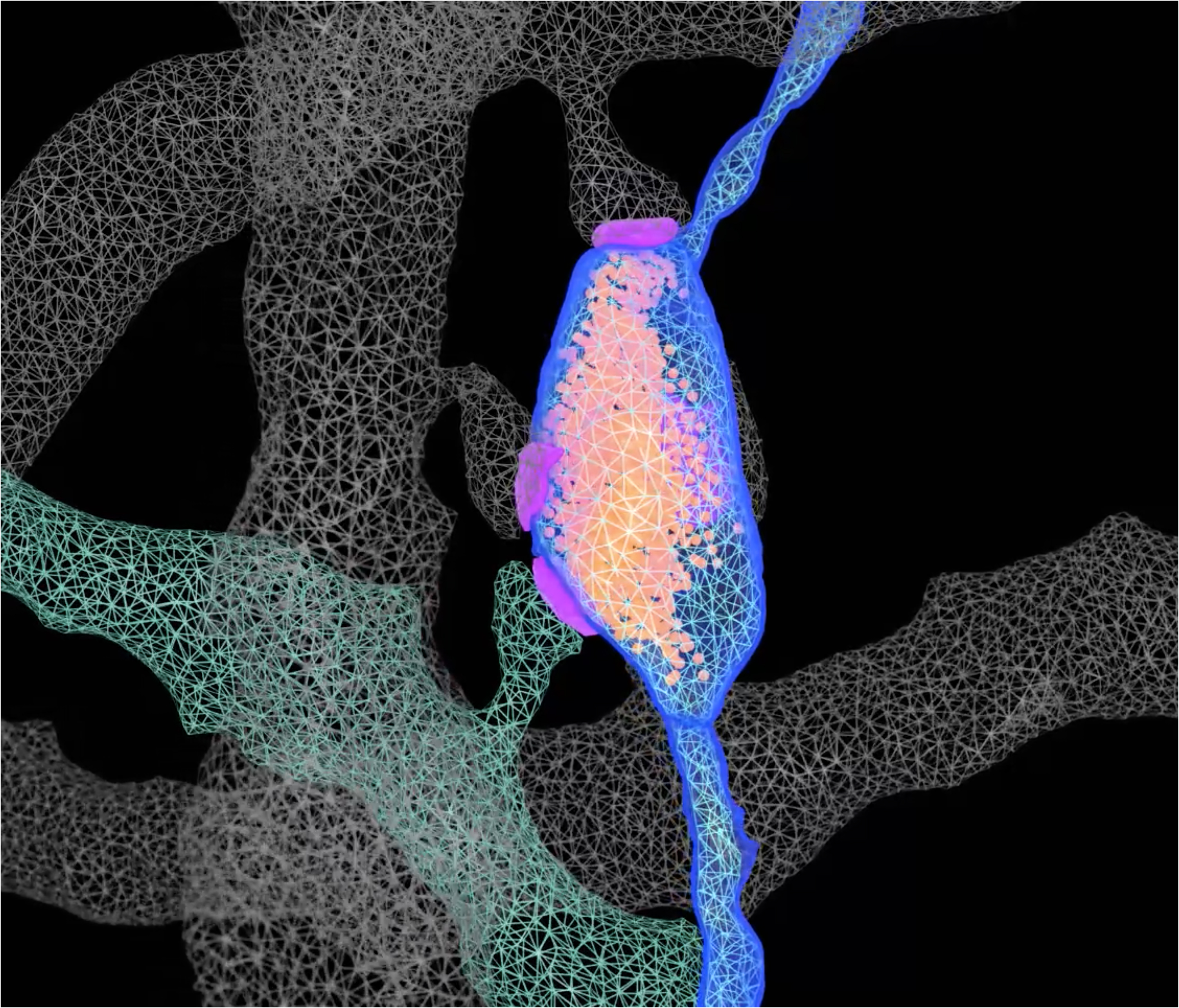
The findings, published in ScienceHe showed that the neurons assigned to a trace of memory reorganized their connections to other neurons through an atypical connection type called multisináptic bouton. In a multisináptic bouton, the neuron axon that transmits the signal with information contacts multiple neurons that receive the signal. According to researchers, multisináptic buttons can allow cell flexibility for the coding of information observed in previous research.
The researchers also found that the neurons involved in memory formation were not preferably connected to each other. This finding challenges the idea that «the neurons that shoot together», as a traditional theory of learning predicted.
In addition, the researchers observed that the neurons assigned to a trace of memory reorganized certain intracellular structures that provide energy and support for communication and plasticity in neuronal connections. These neurons also had improved interactions with support cells known as astrocytes.
Using a combination of advanced genetic tools, 3D electronic microscopy and artificial intelligence, scientists of scripps Marco Uytiepo, Anton Maximov, Ph.D., and their colleagues rebuilt a neuron wiring diagram involved in learning and identified structural changes to these neurons and their connections to cellular and subceler levels.
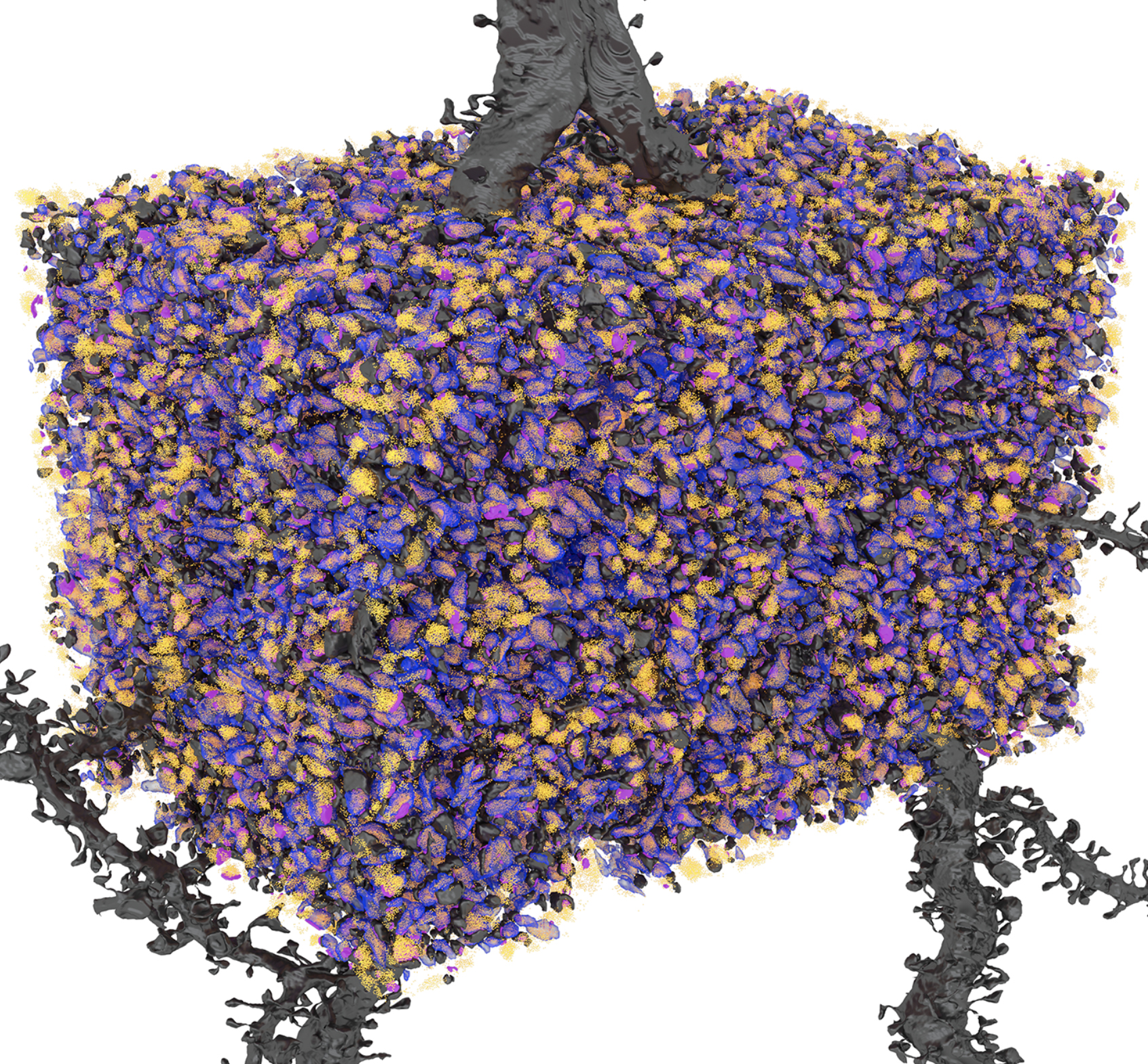
To examine the structural characteristics associated with learning, the researchers exposed mice to a conditioning task and examined the brain hippocampus region approximately 1 week later. They selected this time point because it occurs after the memories are codified for the first time, but before they are reorganized for long -term storage. Using advanced genetic techniques, the researchers permanently labeled subsets of hippocampus neurons activated during learning, which allowed reliable identification. Then they used 3D electronic microscopy and artificial intelligence algorithms to produce nanoscale reconstructions of exciting neuronal networks involved in learning.
This study provides an integral vision of the structural stamps of memory formation in a brain region. It also raises new questions for greater exploration. Future studies will be crucial to determine if similar mechanisms operate at different time points and neuronal circuits. In addition, more research is needed on the molecular composition of multisináptic boutones to determine their precise role in memory and other cognitive processes.
The research was supported by funds from the National Institute of Mental Health, the National Institute of Neurological Disorders and Cerebrovascular Accidents, and Nih’s Brain research through the advancement of innovative neurotecotecnologies® Initiative, or Brain Initiative®.
WHO:
Jamie Driscoll, National Mental Health Institute
Dr. Eunyoung Kim, National Institute of Mental Health
Study:
Uytiepo, M., Zhu, Y., Bushong, E., Chou, K., Polli, FS, Zhao, E., Kim, K.- Y., Luu, D., Chang, L., Yang, D., Ma, Tc, Kim, M., Zhang, Y., Walton, G., Quach, T., Haber, M., Patapoutian, L. Shahbazi, A., Zhang, Y., … Maximov, A. (2025). Synaptic architecture of an engram of memory in the mouse hippocampus. Science. http://www.science.org/doi/10.1126/science.ado8316
NIH FINANCING:
###
He Brain research through the advancement of innovative neurotecotecnologies® and Brain Initiative® are registered trademarks of HHS.
About the National Institute of Mental Health (NIMH): The NIMH mission is to transform the understanding and treatment of mental illnesses through basic and clinical research, paving the path for prevention, recovery and cure. For more information, visit the NIMH website.
On the National Health Institutes (NIH): NIH, the Nation Medical Research Agency, includes 27 institutes and centers and is a component of the Department of Human Health and Services of the United States. NIH is the main federal agency that performs and supports basic, clinical and translational medical research, and is investigating the causes, treatments and priests for common and rare diseases. For more information about nihand your programs, visit the NIH website .
Nih … convert discovery into health®


