


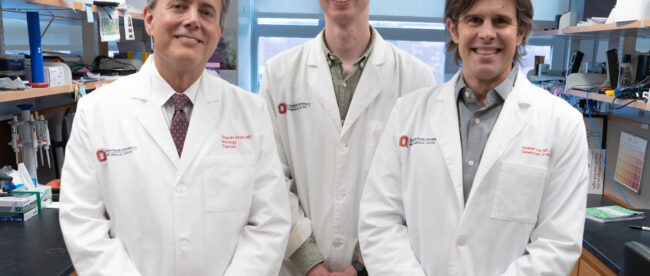
Benjamin Segal, MD, Andrew Jerome, PHD and Andrew Sas, MD, PHD, directed a recent study that found a new type of immune cell discovered in the human bone marrow can cultivate healthy nerve cells when stimulated in the laboratory. The hope is that your research will lead to effective treatments for a wide range of injuries and diseases currently incurable that affect the central nervous system.
Researchers at Ohio State University led by Dr. Benjamin Segal, professor and president of the Department of Neurology of The Wexner Medical Center of Ohio State University and College of MedicineThey have made an innovative discovery that could transform treatment for injuries and neurological diseases. The team identified a special type of human white blood cells capable of re -launching nerve fibers, a previously considered impossible process under conditions in which damaged nerve cells generally do not regenerate. This important advance, published in Nature immunologyIt is based on the previous research of the team in mice four years ago.
Research demonstrates how bone marrow cells can be transformed into powerful healing agents through laboratory stimulation with specific molecules. These «pro-regenerative cells» were generated successfully from eight different human donors, and cells of all donors effectively drive human nerve cells to regenerate nerve fibers. The most impressive, these specialized cells tripled the survival rate of stressed nerve cells, which suggests possible applications both to decelerate degenerative neurological conditions such as ELA, Alzheimer’s and multiple sclerosis, as well as damage to reversal the brain lesions, optical nerve and spinal cord.
Dr. Segal’s team, including the authors of the Co-Primero, Dr. Andrew Jerome and Dr. Andrew Sas (assistant professor of neurology in the state of Ohio), now focus on bringing these treatments to patients. Their approach would imply extracting cells from a patient, stimulate them and cultivate them to large quantities in the laboratory, and then reinforce them at the site of injuries or diseases. «Our ultimate goal is to develop treatments using these special cells, to reverse the damage to the optical nerve, the brain and the spinal cord, thus restore the lost neurological functions,» said Dr. Segal, who also directs the Institute for Neuroscience Research of the State of Ohio. With the success of its laboratory experiments, the team is working on the development of efficient methods to cultivate and administer these cells to begin clinical trials, which provides hope to millions affected by these previously not treatable conditions.


