


How many greenhouse gases does the production of different foods cause, measured in miles traveled or in light hour equivalents?
“Our eating habits are doing “We and the planet are becoming increasingly unhealthy: it is a lose-lose situation.” “A global transformation of the food system is “It is urgently needed.”
“In consideration of growing evidence on the environmental effects of food, in 2015, the [U.S.] Dietary Guidelines Advisory Committee including for the first time a chapter focused on food security and sustainability.” It concluded that “a dietary pattern high in plant-based foods, such as vegetables, fruits, whole grains, legumes, nuts, and seeds, and lower in animal-based foods, is more health-promoting and associated with lower impact environmental than the current one.” average American diet.” However, as expected, “despite unprecedented public support, this and other sustainability terms were not included in the final 2015-2020 Dietary Guidelines published by the US Department of Health and Human Services and the U.S. Department of Agriculture.”
The US Dietary Guidelines didn’t even stick closely enough to the science of healthy eating. “Many national dietary guides do not reflect «This evidence on healthy eating includes no or overly lax limits on animal foods, particularly meat and dairy, despite a contrary evidence base.» Even if you completely ignored planetary health and simply stuck to the latest evidence on healthy eating, you would have knock-on environmental benefits. Replacing animal-based foods with plant-based ones would not only improve nutrition and help people live longer, but could also reduce greenhouse gas emissions by up to 84 percent.
In general, “plant-based foods” cause fewer adverse environmental effects” by almost any measure. In terms of carbon footprint, all the foods that are The equivalent of driving more than a mile (1.6 km) for every 4 ounces (113 g) served is animal products, as you can see below and at minute 1:44 of my video. What foods have the lowest carbon footprint?print?.
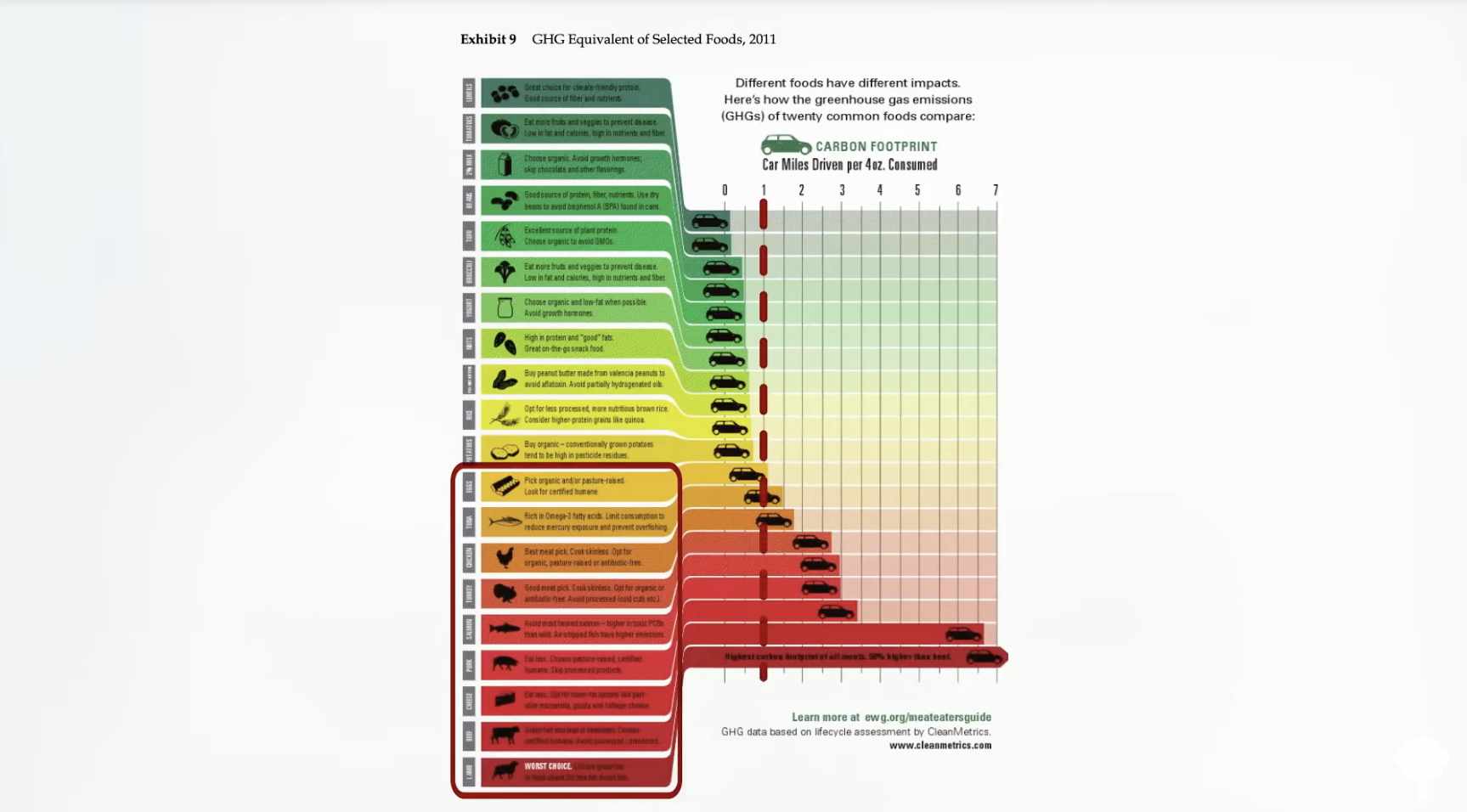
Down and at 2:05 on me videocan see greenhouse gas emissions from various foods. Although something like a lamb chop or farmed fish may be the worst, eating chicken causes about five times more global warming than tropical fruits, for example. Who are the climate superstars? Legumes: beans, split peas, chickpeas and lentils.
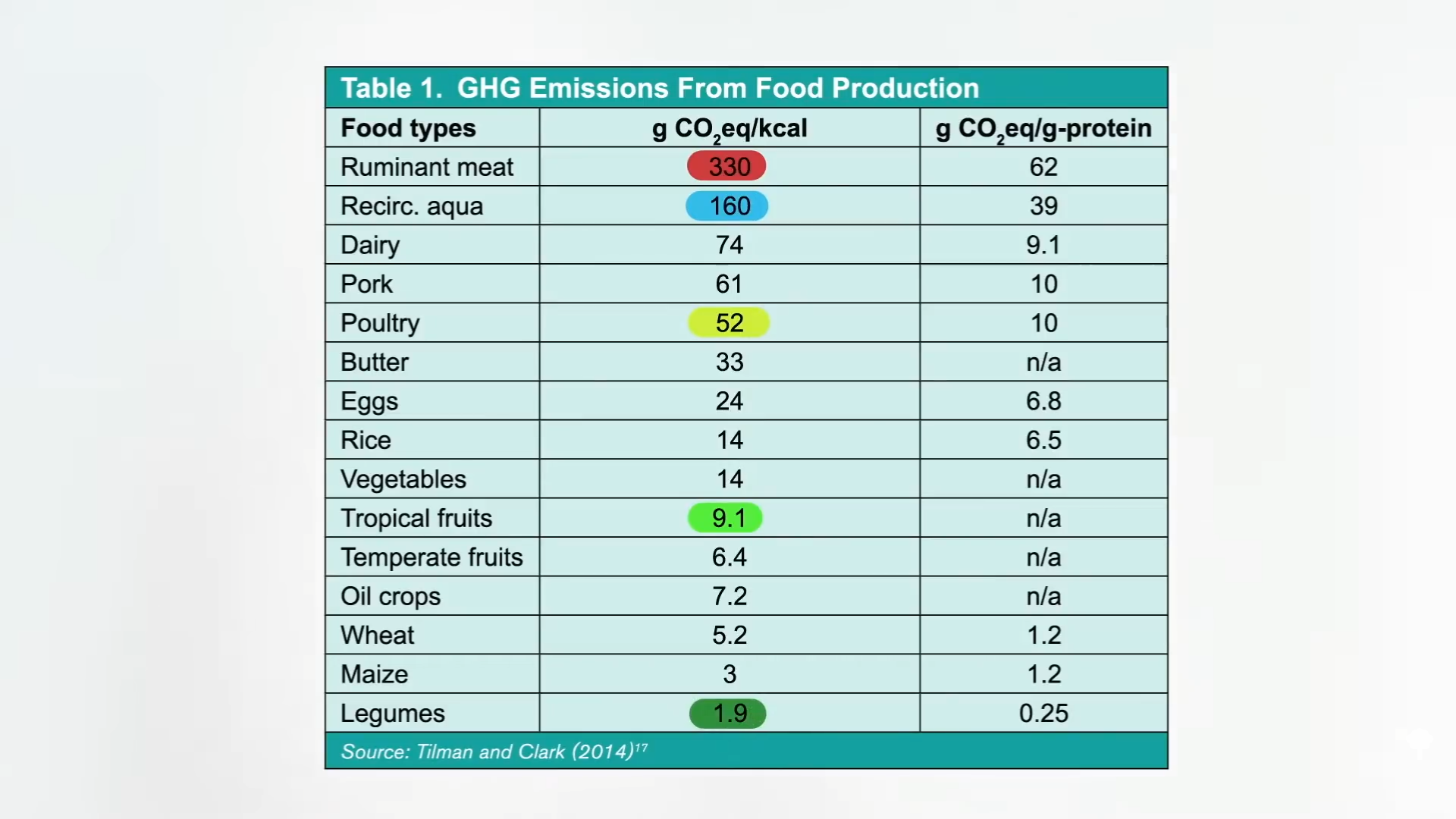
“For example, in the United States, substituting beans for beef nationwide could generate up to 75% of 2020 GHGs [greenhouse gas] reduction goal and save an area of land 1.5 times the size of California,” not to mention the health benefits. And it’s not just about greenhouse gases. “To produce 1 kg [2.2 lbs] bean protein requested approximately eighteen times less land, ten times less water, nine times less fuel, twelve times less fertilizer and ten times less pesticides compared to producing 1 kg [2.2 lbs] of beef protein.”
So yes, according to the prestigious EAT-Lancet Commission, more plant-based products may be better, but even “a shift toward a dietary pattern emphasizing “Whole grains, fruits, vegetables, nuts and legumes without necessarily becoming a strict vegan will be beneficial.” In Europe, for example, researchers found that simply “halving meat, dairy and egg consumption in the European Union would achieve a 40% reduction in nitrogen emissions, a 25% to 40% reduction in greenhouse gas emissions and 23% less per capita use of cropland for food production. In addition, changes in diet would also reduce health risks, reducing cardiovascular mortality, which is The main cause of death in Europe.
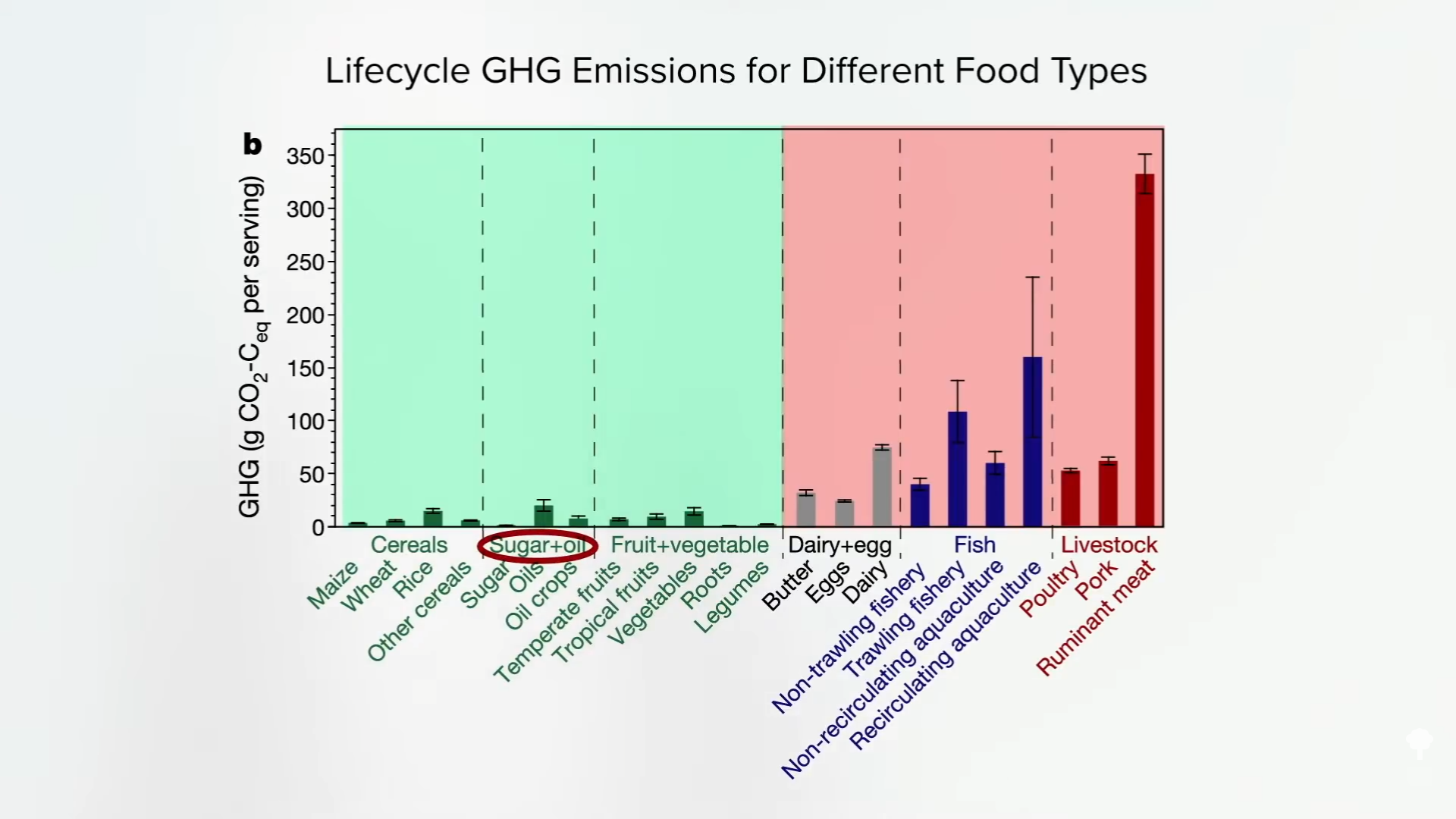
«However, minimizing Environmental impacts do not necessarily maximize human health.” Yes, as you can see below and at 3:33 in my videoanimal products, including dairy, eggs, fish and other meats, release significantly more greenhouse gases per serving than plant-based foods, but eating added sugar and oil won’t do your body any favors.
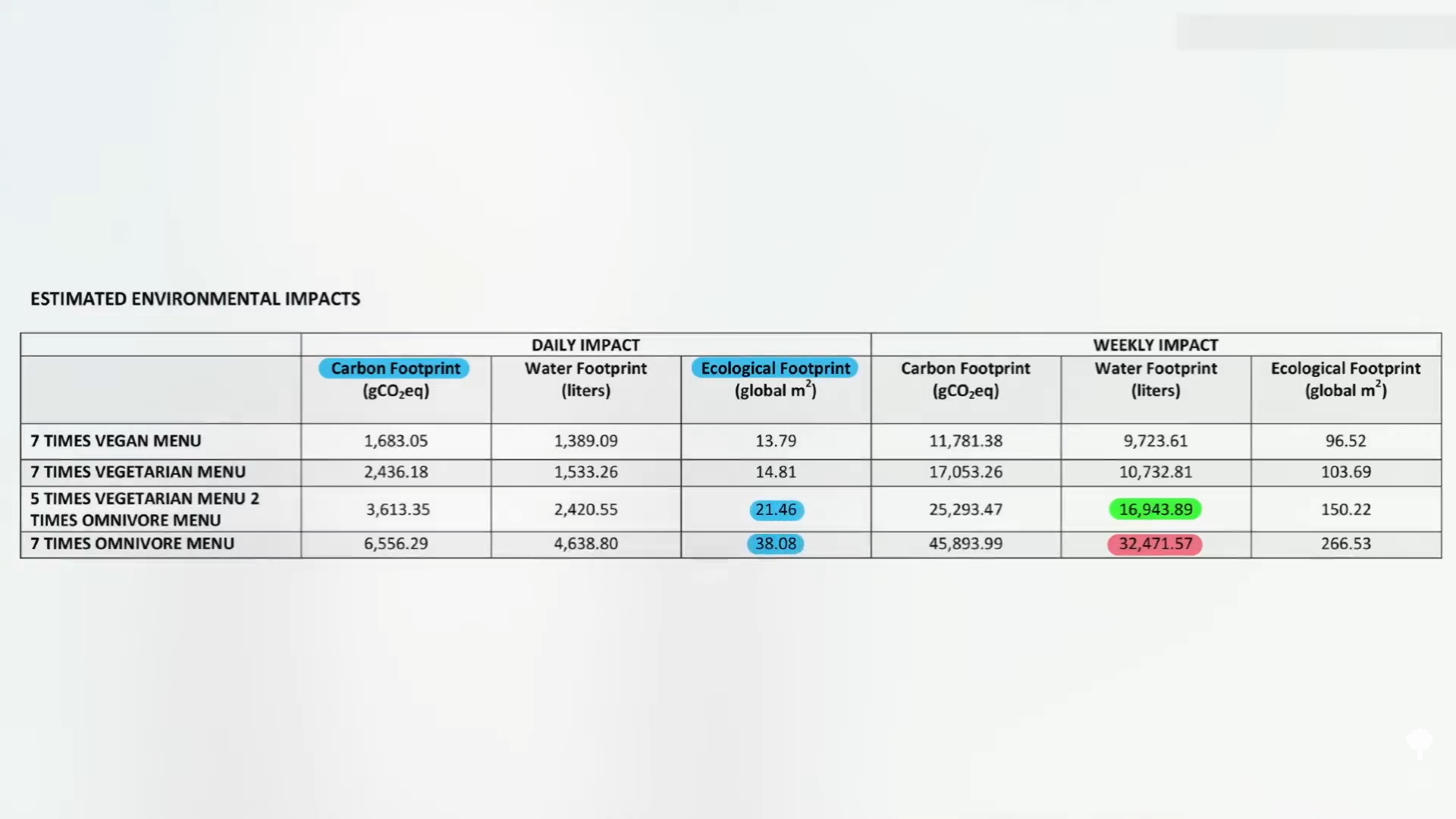
In California, include more animal products in your diet requires 10,000 additional quarts/liters of water each week. So, that’s like taking 150 more showers in seven days. As you can see below and at 4:00 in my videoskipping meat only during the week could keep thousands of gallons of water a week, compared to eating meat every day, in addition to reducing your daily carbon footprint and your total ecological footprint by approximately 40 percent.
In fact, some countries are doing something about it. For example, the “Chinese government has outlined a plan to reduce its citizens’ meat consumption by 50%,» while much of the rest of the world seems to be doing quite the opposite, pumping billions of taxpayer dollars into subsidizing the meat, dairy and egg industries, as you can see below and at 4:15 in my video.
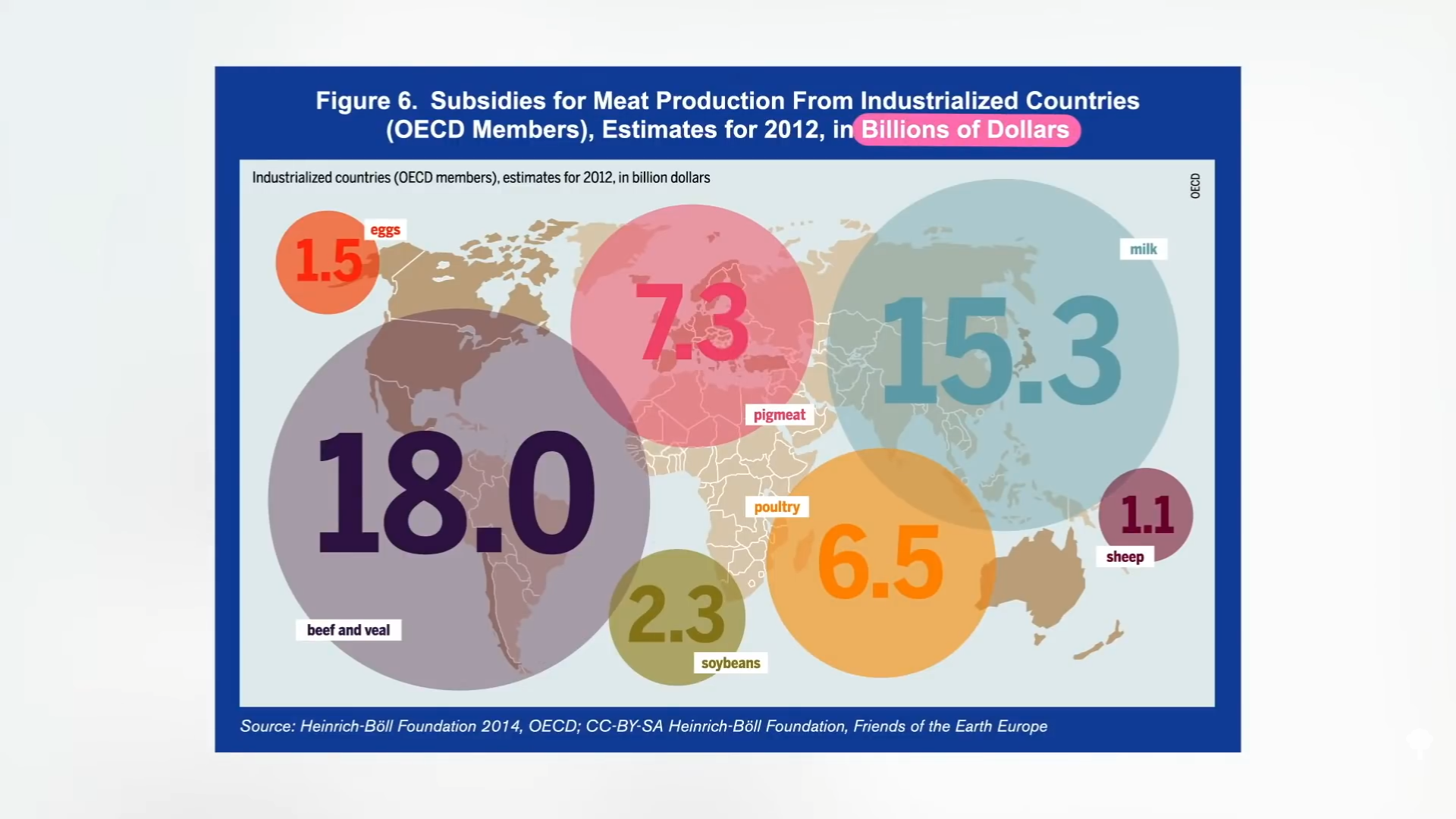
We can certainly all try to do our part. However, an obstacle to dietary change may be that “consumers underestimate“The environmental impacts of different types of foods. Labeling can help. For example, imagine picking up a can of beef noodle soup and looking at the image below, shown at 4:38 in my video.
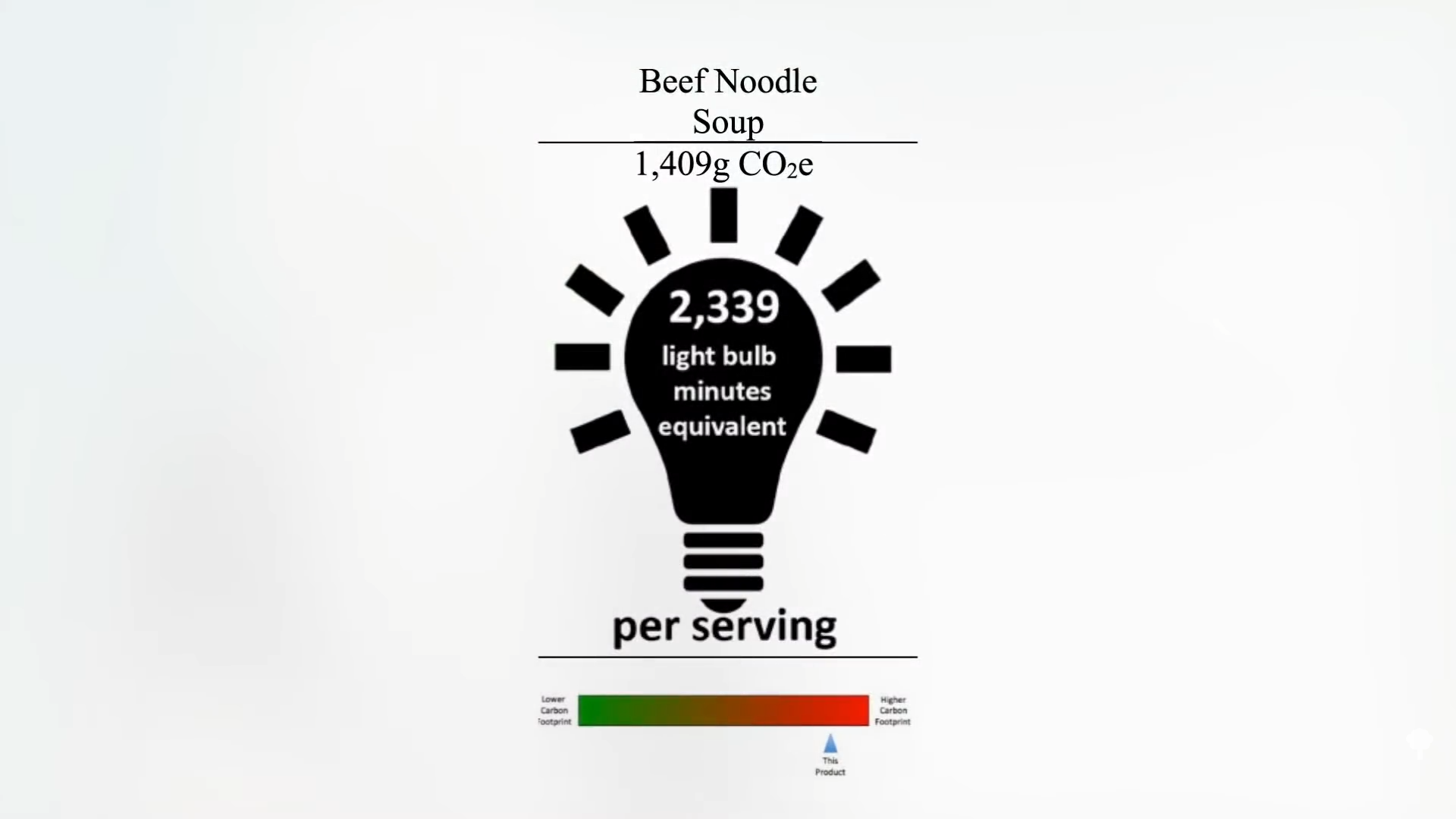
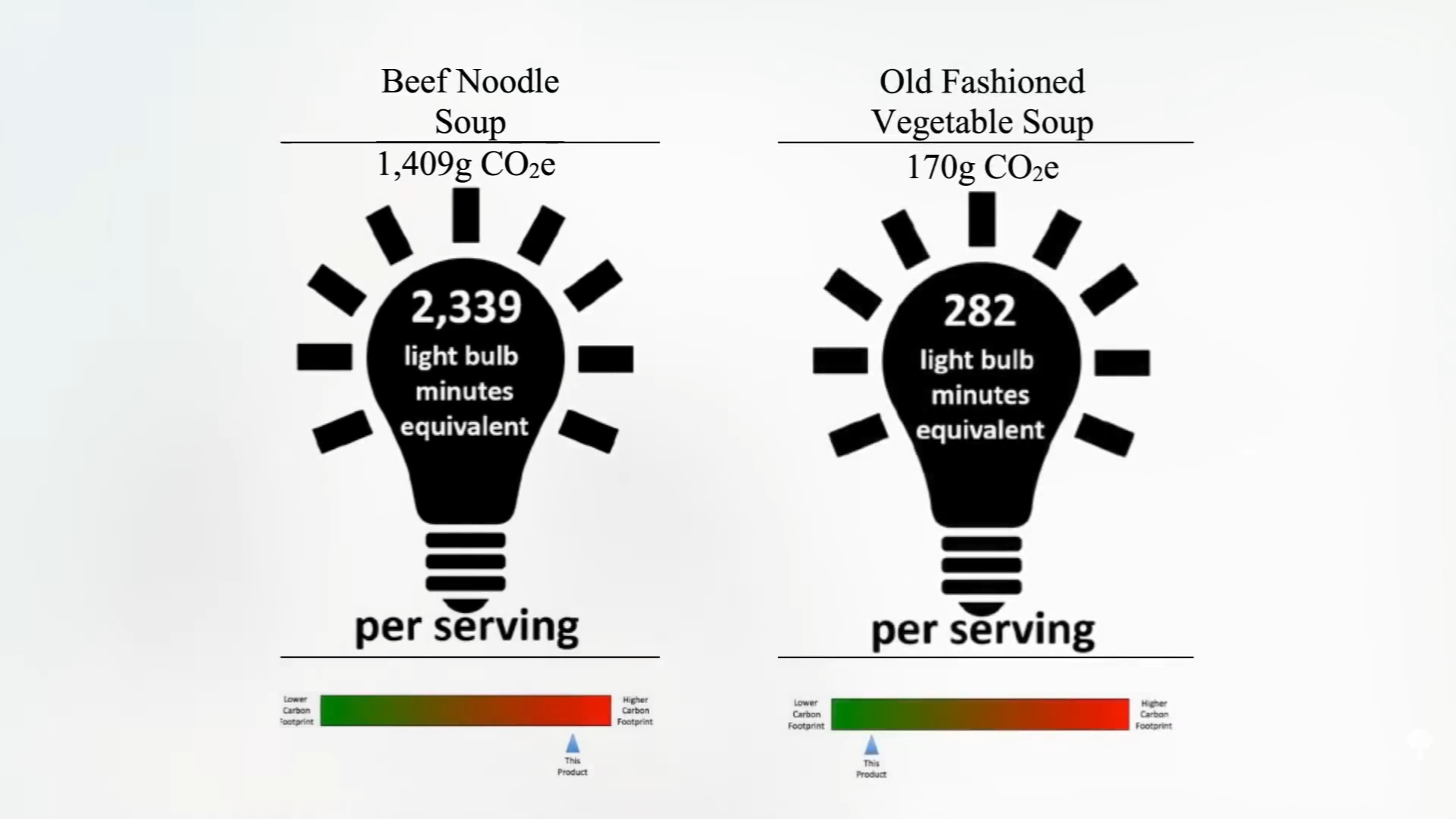
The carbon footprint of a single half-cup serving of beef noodle soup is like departure on for 39 hours straight, and not an eco-friendly bulb, but an old school 100 watt incandescent bulb. Compare that to eating a meatless vegetable soup. There is a difference of 34 light bulb hours between the two, as you can see below and at minute 4:50 in my video. You can imagine someone getting on your case for unnecessarily leaving a light on for 34 minutes, but this is 34 hours is wasted simply by eating half a cup (120 ml) of a soup with meat instead of a vegetable soup without meat.
This is the second in a series of three videos. If you missed the first one, check it out Friday Favorites: Win-Win Dietary Solutions to the Climate Crisis. Stay tuned for Which diets have the smallest carbon footprint?. See also: Friday Favorites: Which Foods and Diets Have the Smallest Carbon Footprint?.
For more information, watch my video above. Diet and climate change: cooking up a storm and a [digital download] on the use of plant-based or cultured meat as a climate (and pandemic) mitigation strategy.


